Passover Seder Reflection
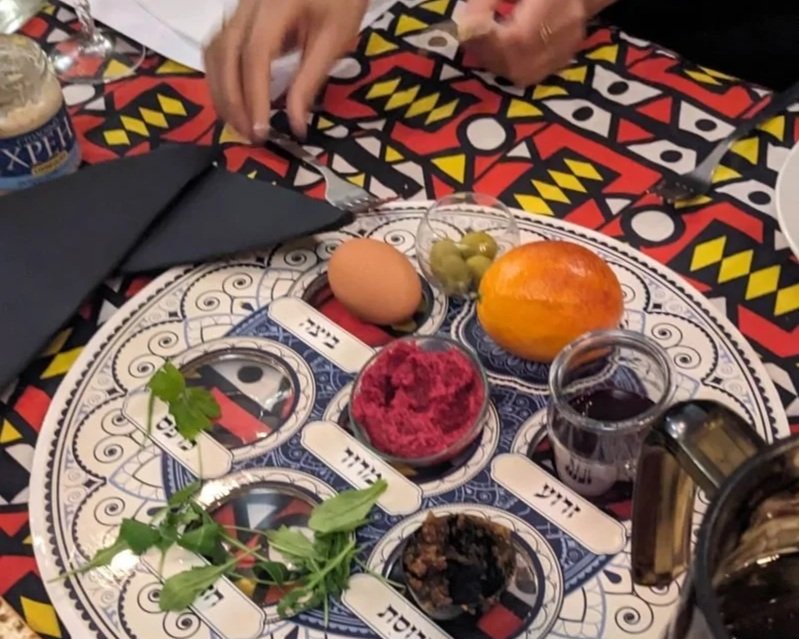
Last night was the first Passover Seder I've been to in a long time that I haven't led. And much like I've written about how much I learn when I'm facilitated by others, my experience of being taken along a journey of a Seder for the first time in years was incredibly rich.
I grew up with Seders being shared with family (blood and chosen) and I've continued that tradition with chosen family and close friends over the last almost decade.
But last night we were a group of around 20 people, with most people knowing only 2-3 others. People were invited through activist or community groups, or through friends and family. We started with a blessing (Shehechiyanu) that celebrated the newness of this particular group. This made the intimacy, openness, debate, reflection, and beauty of the evening even more remarkable to me.
It was also the first time I've been at a Seder that was primarily Jewish people who had traditions and stories to share that I hadn't heard before. Having grown up in a mixed heritage family and with plenty of non-Jews and secular Jews in my chosen family, I've often been the person who knows the rituals, with everyone else sharing reflections and participating - but never have I been in a space where everyone had so many traditions to contribute.
At the table were others of Latvian/Lithuanian descent like me as well as other Ashkenazis (very much the dominant Jewish culture in Europe) but also Mizrahi Jews from Palestinian and Iraqi heritage, and Sephardi Jews of Spanish descent (many of whom had been exiled to Latin America over the last centuries).
There were many moments that really stood out to me, but one that feels relevant to share is the ritual of questioning that happens during Passover.
Together during the Seder, we ask 'why is this night different from all other nights?', and we respond with the many reasons to remind us of how our ancestors were enslaved and tonight's rituals must urge us into solidarity and action alongside all oppressed people.
But last night, the hosts asked us to reflect on the questions we ask in ritual. Why do we ask these questions? What else do we want to ask?
As a peer learning facilitator, I spend a lot of time working with the power of open questions. But this was the first time I had really made the connection between this practice in my professional life, and the practice of questioning that is so central to Jewish study and activism.
Sometimes we ask questions because we want to know the answer. But other times, we ask to put something impossible into words that can only exist as a question. There are no answers, or there are a million - so we must ask to get closer to what we want to know.
So ask questions, but not to extract answers.
Ask to challenge yourself and each other to get deeper. Ask because you really want to know.
And after you've asked, be willing to sit with whatever silence, or discomfort, or lack of clarity might come out the other side.
Chag sameach 🍉